🌱 Grow Bag Size Calculator — Find the Right Bag for Every Crop
Choosing the wrong grow bag size is one of the most common mistakes container gardeners make. Too small and your plants become root-bound, stop producing, and dry out within hours. Too large and the excess soil stays wet, inviting root rot. Our Grow Bag Size Calculator gives you the exact minimum and recommended bag size for 26 of the most popular crops — based on your number of plants.
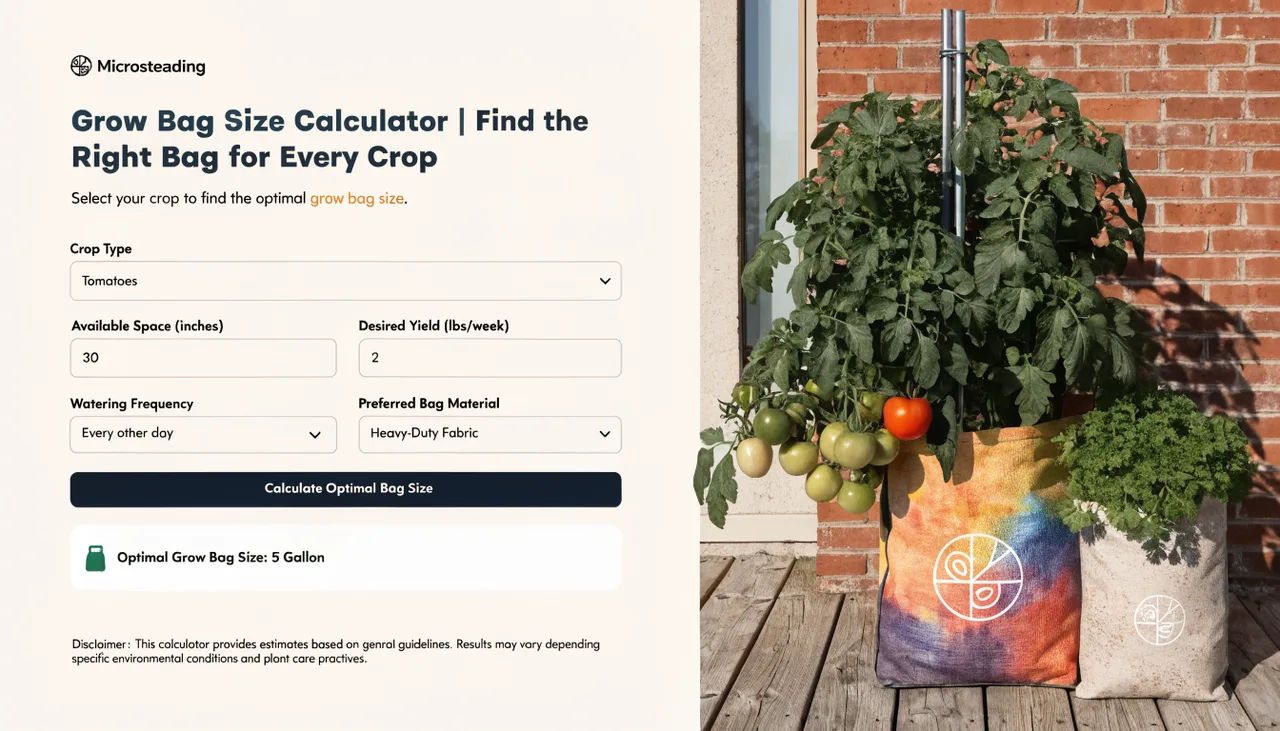
🧮 Calculate Your Grow Bag Size
What Size Grow Bag Do I Need?
The right grow bag size depends on three things: the crop you're growing, how many plants you want per bag, and whether you're aiming for minimum survival or maximum yield. As a general rule, compact herbs and leafy greens need 1–2 gallons per plant, fruiting vegetables like tomatoes and cucumbers need 5–10 gallons, and large crops like zucchini, sweet potatoes, and dwarf citrus need 10–15 gallons per plant.
Does The Size of Your Bag Affect Yield?
Yes — significantly. A tomato plant grown in a 5-gallon bag will survive, but the same plant in a 10-gallon bag will produce noticeably more fruit over a longer season. Larger bags hold more water, more nutrients, and give roots the room they need to anchor a productive plant. For fruiting crops especially, upsizing your bag is one of the cheapest yield improvements you can make.
🌿 How Many Plants Per Grow Bag?
This varies widely by crop. Compact plants like lettuce, radishes, herbs, and strawberries can share a bag comfortably — a single 10-gallon bag can hold up to 5 or 6 lettuce plants. Large crops like tomatoes, zucchini, and sweet potatoes need one bag per plant, with no exceptions. The calculator handles all of this automatically — just enter your crop and plant count to get the right number.
🛍️ Grow Bag Sizes Explained
Grow bags are typically sold in standard sizes: 1, 2, 3, 5, 7, 10, 15, 20, and 25 gallons. When the calculator gives you a recommended total, round up to the nearest standard size available. A 12-gallon recommendation means you should buy a 15-gallon bag — never go below the minimum, and always round up rather than down.
♻️ Why Grow Bags Work So Well for Micro Gardeners
Grow bags offer advantages that rigid pots simply can't match. Their fabric walls allow air pruning — when roots reach the edge of the bag they stop growing rather than circling, which leads to a denser, more efficient root structure. They also drain freely, warm up faster in spring, and fold flat for storage in winter. For microsteaders working with limited space, grow bags are one of the most flexible and productive container options available.