
🌱 Interactive Planting Calendar - Personalised Sowing Dates for 26 Crops
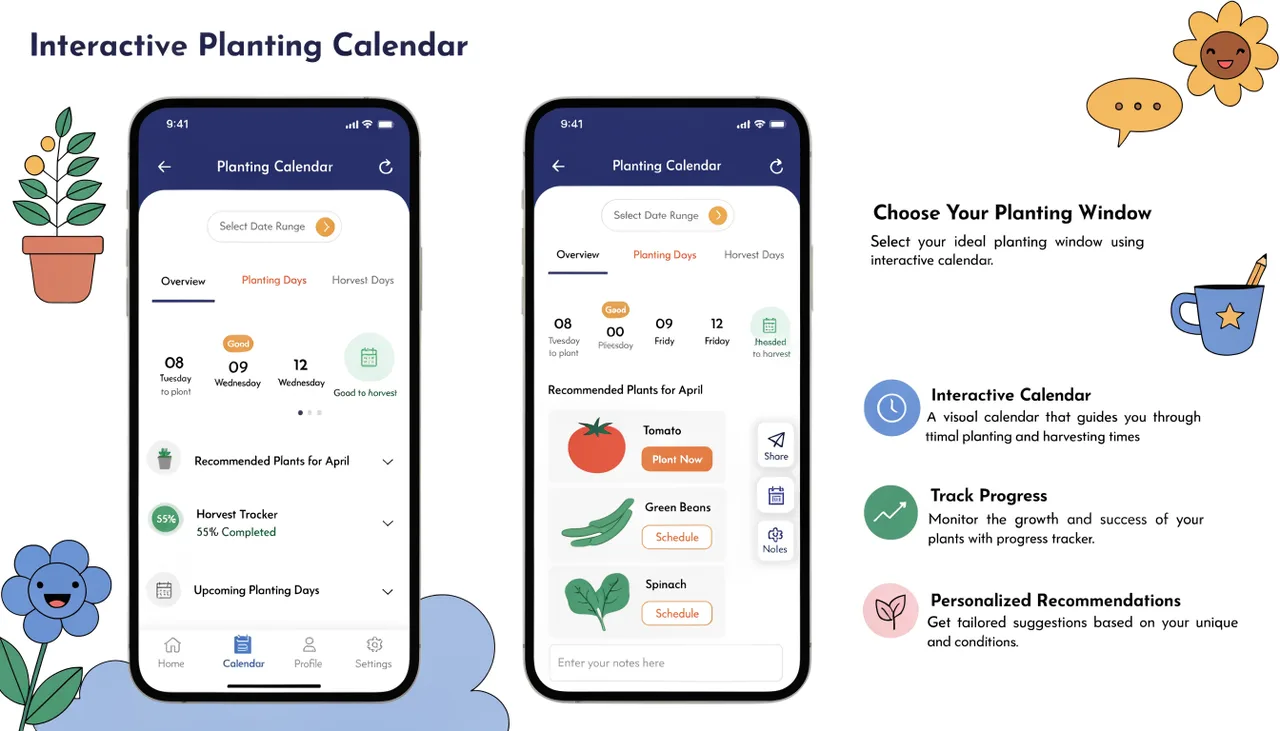
A planting calendar is only useful if it reflects your actual growing conditions. A generic chart that tells you to sow tomatoes in March works fine if you garden in southern England, but it is useless if you are in Curaçao, New Zealand, or northern Canada. Our Interactive Planting Calendar solves this by calculating precise indoor sowing dates, transplant dates, direct sow dates, and harvest windows for 26 crops based on your specific last frost date. Change the date and every crop on the calendar updates instantly.
What Is a Last Frost Date and Why Does It Matter?
Your last frost date is the average date in spring after which freezing temperatures are unlikely in your area. It is the single most important date in any planting schedule because it determines when frost-sensitive crops can safely go outside, when to start seeds indoors so transplants are ready at the right moment, and how many weeks of growing season you have before autumn cold returns. Every date in this calendar is calculated relative to that anchor point. Get it right and your entire season aligns correctly.
If you garden in a tropical or frost-free climate, use your planned outdoor planting date instead. The mathematics is the same. The calendar gives you accurate lead times and harvest windows relative to whatever reference date you enter.
How Far in Advance Should I Start Seeds Indoors?
This depends entirely on the crop. Slow-growing crops that need a long warm season require the longest indoor head start. Chili peppers need 10 weeks, peppers need 8 weeks, and tomatoes need 6 weeks before the last frost date. Fast-growing crops like cucumbers and zucchini only need 3 weeks. Starting them earlier produces overgrown, stressed seedlings that often perform worse at transplant than those started at the right time. The calendar calculates the correct window for each of the 26 crops automatically, so there is no guesswork involved.
Which Crops Cannot Be Transplanted and Must Be Direct Sown?
Four crops in this calendar must always be direct sown and should never be started in pots for transplanting: carrots, radishes, beans, and cilantro. Carrots and radishes develop taproots that are easily damaged during transplanting, resulting in forked, stunted, or misshapen roots. Beans resent root disturbance and transplanted seedlings routinely underperform those sown in place. Cilantro bolts rapidly under transplant stress and rarely recovers. For these crops, the calendar shows only a direct sow date because starting them indoors simply does not work.
How Do I Use the Calendar in the Southern Hemisphere or Tropics?
The calendar supports three regional settings: Northern, Tropical, and Southern. Each one changes the date label and guidance to match your growing context. For Southern hemisphere growers in Australia, New Zealand, South Africa, or South America, select Southern and enter your actual local last spring frost date, which typically falls between September and November depending on your region. The calendar automatically suggests October 15 as a starting point. Do not try to convert a Northern hemisphere date. Just enter the real frost date for your location and the calendar will calculate everything correctly from there.
For tropical and Caribbean growers with no frost date, including gardeners in Curaçao, Southeast Asia, Central America, and coastal equatorial regions, select Tropical and enter your preferred planting start date or the beginning of your dry season instead. Growing in frost-free climates is governed by wet and dry seasons rather than frost, so use the dry season start as your anchor point. All lead times, transplant windows, and harvest estimates will calculate correctly relative to whatever date you enter.
🌿 How to Read the Colour-Coded Calendar Grid
Each crop row shows coloured bars across the months of the year. Blue bars indicate when to start seeds indoors. Orange bars show the transplant window, which is when to move seedlings outside after hardening off. Green bars show the direct sowing window for crops that go straight into the ground or container. Gold bars show the expected harvest window. The current calendar month is highlighted with a red border so you can immediately see what should be happening right now. Click any crop row to expand a full detail card showing exact dates, recommended grow bag size, soil mix profile, and watering needs.
What Does "What to Sow This Month" Show Me?
Clicking the green "What to Sow This Month" button filters the calendar to show only crops that have an active phase in the current real-world month, whether that is starting seeds indoors, transplanting, direct sowing, or harvesting. It is designed as a quick monthly reference so you can open the page at the start of each month, hit the button, and immediately see exactly what actions your garden needs. The pulsing indicator shows the filter is active. Click it again to return to the full calendar view.
🗓️ Using the Calendar for Container and Grow Bag Gardening
Container and grow bag growers face unique timing challenges compared to traditional bed gardeners. Containers warm up faster in spring, which means you can often transplant slightly earlier than the calendar suggests for frost-tolerant crops like lettuce, kale, and spinach. They also cool down faster in autumn, which shortens the effective harvest window for warm-season crops. Use the harvest dates as a planning guide and watch your plants for the real signals. Flavour, size, and texture tell you more than any calendar can. The calendar also links directly to recommended grow bag sizes and soil mixes for each crop, giving you everything you need to plan a complete container growing season from one page.
📋 A Note on Planting Dates from Experience
Planting calendars are probability tools, not guarantees. The dates calculated here are based on averaged growing data and standard lead times for each crop. They will get you close in most climates, but local microclimates, unusual weather, and variety-specific differences will always create some variation. The most valuable thing any grower can do alongside using a planting calendar is keep a simple planting journal. Recording your actual sow dates, germination times, transplant dates, and first harvest each season builds a personalised dataset that becomes more accurate than any general tool over time. Start this season, even with just a notebook.
💡 Click any crop row to see full planting dates, bag size, soil mix, and watering needs.