🌱 Seed Starting Date Calculator | Know Exactly When to Sow
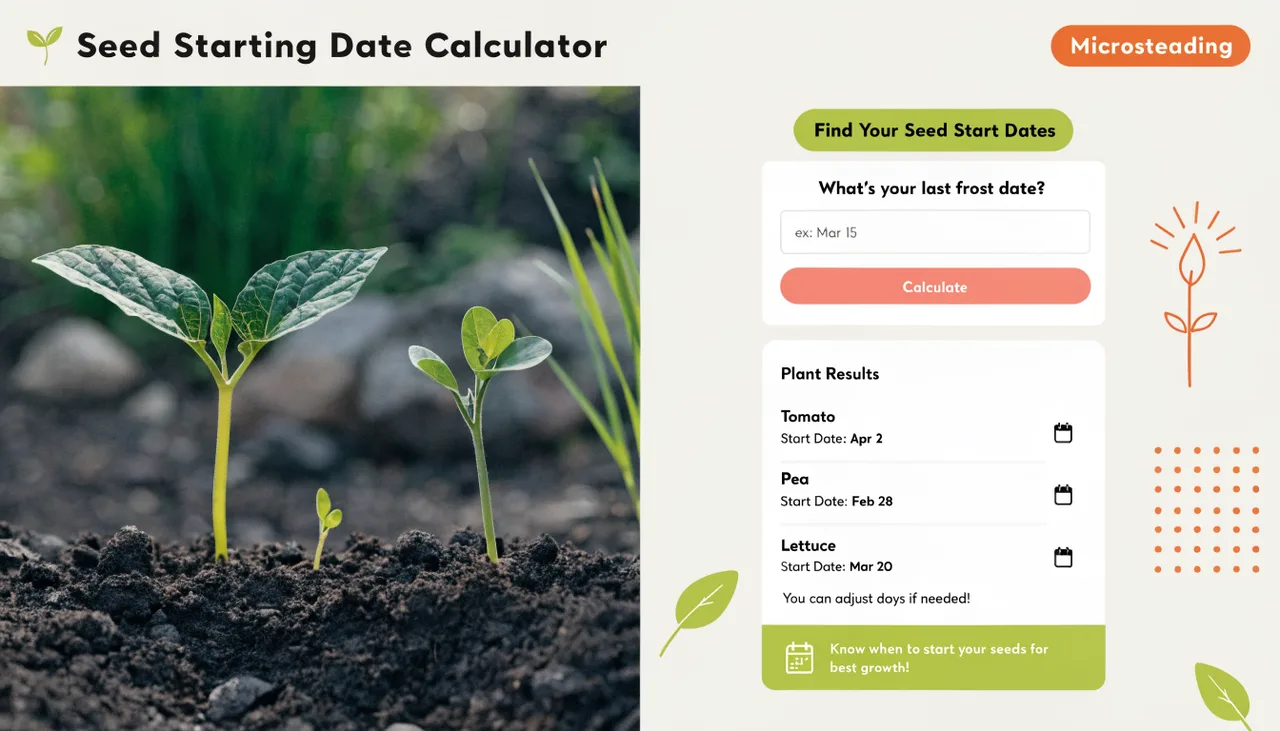
Timing is everything in gardening. Start your seeds too early and seedlings outgrow their pots, become leggy, and struggle at transplant. Start too late and you lose weeks of growing season — or miss your harvest window entirely. Our Seed Starting Date Calculator gives you precise indoor start dates, direct sow dates, transplant dates, and estimated harvest windows for 26 of the most popular crops, all based on your local last frost date.
Why Last Frost Date Is the Foundation of Every Planting Schedule
Your last frost date is the anchor point for your entire growing season. It is the average date after which freezing temperatures are unlikely in your area — and it determines when tender crops can safely go outdoors, when frost-tolerant crops should be sown, and how many weeks you have to start seeds indoors before conditions are right outside. Get this date right and everything else follows logically. Our calculator uses it as the central reference point for every crop in the list.
Which Crops Should Be Started Indoors?
Crops that need a long growing season — like tomatoes, peppers, chili peppers, and sweet potatoes — must be started indoors weeks before the last frost. These plants cannot be direct sown outdoors because they would not have enough warm days to reach maturity before cold weather returns. Slow-germinating herbs like rosemary, thyme, and oregano also benefit from an indoor head start. As a rule, any crop that needs more than 70 days to maturity and is frost-sensitive should be started inside.
Which Crops Should Be Direct Sown Outdoors?
Root vegetables like carrots and radishes must be direct sown — their taproots are too easily damaged during transplanting, which causes forked, stunted, or misshapen roots. Beans and peas also strongly prefer to be sown where they will grow. Cilantro bolts rapidly under stress and does not transplant well either. For these crops, direct sowing at the right time consistently outperforms transplanting, even if that means waiting a little longer to get them in the ground.
What Does Days to Maturity Actually Mean?
Days to maturity is the number of days from transplanting (for indoor-started crops) or from germination (for direct-sown crops) until the first harvest. It is an average based on typical growing conditions — your actual results will vary depending on your climate, soil temperature, sunlight, and care. Warm conditions generally speed things up; cool or cloudy conditions slow them down. Use the calculator's harvest estimate as a planning guide rather than a fixed date, and watch your plants for the real signals that harvest is ready.
🌍 Using the Calculator Without a Frost Date
If you garden in a tropical or frost-free climate — like Curaçao, parts of Southeast Asia, or coastal regions near the equator — you may not have a traditional last frost date. In that case, enter your planned outdoor planting date as the reference point instead. The calculator will still give you accurate indoor start dates and harvest windows relative to that date. Focus on rainy season and dry season cycles rather than frost when timing your crops in tropical environments.
📋 A Note on Seed Starting from a Grower's Perspective
After years of growing food in containers and small-space setups, the single most common mistake I see new growers make is starting seeds too early indoors. A tomato seedling started 12 weeks before the last frost will be large, root-bound, and stressed by the time outdoor conditions are right — whereas one started at 6 weeks will transplant cleanly and often catches up within days. The calculator uses research-backed timing windows for each crop specifically to help you avoid this trap.